



sportsYou is the kind of sports app that makes most sense when a team needs a shared place for communication rather than another scoreboard or training tracker. I found its value in bringing conversations, updates, and group coordination closer together, especially when a team’s information is otherwise scattered across text messages, email threads, and social media chats. My overall view is positive but practical: it can make team life easier, yet it works best when everyone agrees to use it consistently.
Developed by sportsYou, this free sports app is aimed at teams and groups, with a Teen content rating. It has passed the point of being a small experiment, reaching more than a million installs, while its average rating sits at 3.9 from roughly fifteen hundred ratings. Those figures suggest a product with a real audience and useful everyday purpose, but also one that may not feel equally polished or essential to every user.
How sportsYou fits into real team life
The central idea is simple: a coach, organizer, parent, or player can use one team-focused space for communication. That sounds modest, but it addresses a familiar problem. Important details often arrive in several places at once: a last-minute message in a group chat, a schedule change in an email, a photo shared somewhere else, and a reminder that only reaches part of the team. A dedicated sports group can reduce that confusion by giving the team a shared point of reference.
In my experience, the biggest benefit is not any single communication tool. It is the context. A message posted for a particular team is easier to understand than a message mixed into a family chat or a general club conversation. When several groups are involved, that separation can save time and prevent the classic mistake of sending a change to the wrong people.
I would describe sportsYou as a communication hub rather than a complete sports-management system. That distinction matters. If you are looking for detailed performance analysis, advanced coaching diagrams, live match statistics, or a full registration platform, this is probably not the app I would choose first. Its strength is keeping people connected around a team, not replacing every other tool a sports organization might use.
A realistic weekly workflow
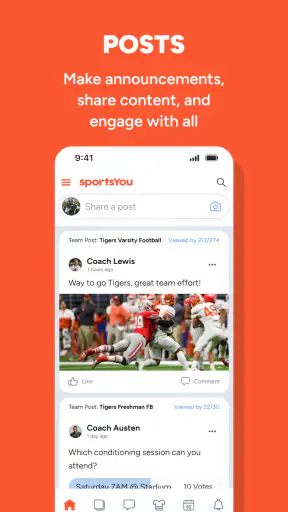
Imagine a youth team preparing for a Saturday match. During the week, the coach can use the team space to share a reminder, clarify what players need to bring, and keep the conversation tied to that group. A parent checking the app later has a better chance of finding the relevant information without searching through a long personal chat history. A player can return to the same team area instead of asking another teammate to forward a message.
The useful habit here is to treat the app as the team’s noticeboard, not merely as another place to chat. I would encourage organizers to put important information in a clear post, keep unrelated discussion separate, and repeat only genuinely urgent changes. That approach makes the app more valuable over time because people learn where to look first.
There is also a subtle organizational advantage in separating audiences. A coach may need one conversation for staff and another for players or families. A club may have several teams that should not receive every announcement. Using team-based communication thoughtfully can reduce noise, but it depends heavily on the organizer setting up groups carefully and maintaining a consistent routine.
Why a dedicated sports space can beat ordinary messaging
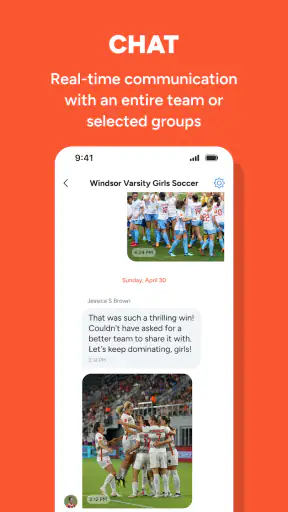
Most teams already have access to familiar messaging apps, so the obvious question is why they should add sportsYou at all. The answer is structure. Ordinary messaging is excellent for quick replies, but it becomes difficult to manage when conversations grow, members change, or several teams share the same community. A dedicated sports app gives the communication a defined purpose.
That does not automatically make it better. If a small group already communicates smoothly in one existing chat, moving everyone may create more work than value. sportsYou becomes more convincing when the group has recurring announcements, multiple participants, or a need to keep team communication distinct from personal conversations.
Compared with email, the app feels more immediate and team-centered. Compared with a general chat app, it is more focused on sports groups. Compared with a club-management platform, its appeal is likely its lighter communication role rather than administrative depth. I see it occupying the middle ground: more organized than casual messaging, but less ambitious than a full club operations suite.
Small habits that make the experience better
One practical tip is to establish a single source of truth before the season becomes busy. If schedule changes appear in the app but attendance questions remain in a separate chat, people will still miss information. I would ask the team to use sportsYou for official updates and reserve other channels for private matters or emergencies. This is not a technical feature; it is a workflow choice, but it has a major effect on whether the app feels useful.
A second tip is to write posts so they can be understood without extra back-and-forth. A short message that clearly says what changed and who needs to act is more useful than several vague replies. This matters particularly for parents who may open the app between other responsibilities and need to understand the update quickly.
A third insight is that the app’s value can rise or fall with membership turnover. When a new player, parent, or coach joins, a dedicated team space gives them a clearer starting point than a private chat history. However, the organizer still needs to make sure newcomers know where the important information is kept. An app cannot solve an onboarding problem if the group uses it inconsistently.
The main weakness: communication only works when adoption is shared
The most meaningful limitation is also common to team communication apps: one person cannot create a reliable system alone. If half the team continues using text messages, another portion checks email, and the rest looks at sportsYou occasionally, the group may end up with more fragmentation instead of less.
This creates an awkward adoption phase. Coaches or organizers may need to remind people to check the app, while parents may resist installing another service for a single team. Players who already have several communication channels may see little reason to change. I would not recommend introducing sportsYou casually; the organizer should explain why the team is using it and make clear which channel carries official information.
There can also be a difference between what a coach wants and what families need. A coach may prefer a focused team feed, while parents may want quick answers about logistics. If every question becomes a long public discussion, the main updates can become harder to spot. Good moderation and clear posting habits are therefore important, even though the app itself cannot replace judgment.
The rating of 3.9 reflects that mixed picture. It is not a warning that the app is unusable, but it does suggest that users may encounter friction depending on their team’s setup, expectations, and willingness to participate. I would approach it as a helpful communication layer rather than a guaranteed solution to every coordination problem.
What to consider before installing
The app is free to download, which makes trying it with a team relatively easy. It also includes in-app purchases ranging from $1.99 to $19.99 per item, so I would still check the purchase flow before assuming every part of the experience is covered by the free installation. For a club deciding whether to introduce it widely, that distinction is worth discussing with whoever manages the team’s budget.
Compatibility is another practical point. The current version is 4.8.0 and supports Android 8.0 or later. That covers many devices, but not every older phone. If a team expects every parent or player to participate, organizers should consider device compatibility before making the app the only route for important announcements.
The Teen rating is also relevant for younger teams. I would not treat an age label as a substitute for adult supervision or sensible communication rules. For youth sports, coaches and parents should agree on appropriate use, decide who can post official information, and avoid relying on informal conversations for sensitive matters.
Who will get the most from it?
sportsYou is a strong match for coaches who are tired of repeating the same information in several places. It can also suit volunteer team managers who need a clearer way to coordinate a group without adopting a large, complicated club platform. Families involved in multiple sports may appreciate having team communication separated by group, provided the teams actually use the app regularly.
It is particularly appealing for teams that experience frequent changes: altered practice arrangements, tournament reminders, equipment notes, or updates that affect only one squad. In those situations, a dedicated communication space can reduce the chance that an important message disappears among unrelated conversations.
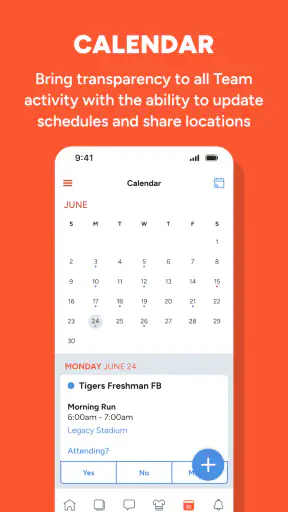
I would be more cautious for a very small group with an already reliable messaging routine. If everyone responds quickly and nobody loses track of announcements, adding sportsYou may not improve much. I would also look elsewhere if the main requirement is detailed scheduling, payments, attendance automation, athlete statistics, or advanced coaching tools. A communication-focused app should not be judged as though it were a complete sports administration package.
How it compares with the usual alternatives
Against ordinary group messaging, sportsYou offers a more purposeful environment, but it asks users to adopt another destination. That trade-off is worthwhile when a team has enough activity to justify organization. For a casual group that only exchanges occasional messages, the familiar option may remain more convenient.
Against email, it is better suited to quick team interaction and ongoing group awareness. Email still has advantages when a message needs to be formally documented, forwarded, or kept alongside other administrative records. I would use sportsYou for team communication and avoid pretending it replaces every formal channel.
Against a full club-management app, sportsYou appears more approachable for communication but less suitable as an all-in-one system. A large organization may need registration, billing, attendance, schedules, and reporting in one place. A single team may prefer the lighter approach because it is easier to explain and less burdensome to maintain.
The deciding question is not whether sportsYou has more features than every alternative. It is whether your team’s current communication is disorganized enough that a dedicated sports space would solve a real problem. If the answer is yes, the app has a sensible role. If the answer is no, convenience may matter more than specialization.
My final assessment
I see sportsYou as a practical team communication app with a clear purpose and a realistic ceiling. Its best quality is the way it gives sports groups a shared context, helping updates stay connected to the team they concern. That can be genuinely useful for coaches, families, and players who are tired of chasing information through unrelated conversations.
Its weakness is not that the idea is misguided; it is that the idea depends on collective discipline. The app cannot keep a team organized if members treat it as optional or continue splitting announcements across several channels. The setup conversation matters almost as much as the installation.
With more than a million installs and an established presence in the sports category, it is a credible option to test with a team. I would recommend starting with one group, agreeing on how it will be used, and seeing whether communication becomes easier after the initial adjustment. The best reason to choose sportsYou is not novelty, but a clear team habit: one place for the updates people actually need.
My recommendation is therefore specific. Coaches, team managers, and active sports families should give it a try when scattered communication is causing missed details. Small groups with no coordination problems, or organizations seeking a complete administrative platform, should probably choose a different solution. For the right audience, though, sportsYou can turn everyday team communication from a loose collection of messages into something much easier to follow.


